
CHEMICAL ANALYSIS
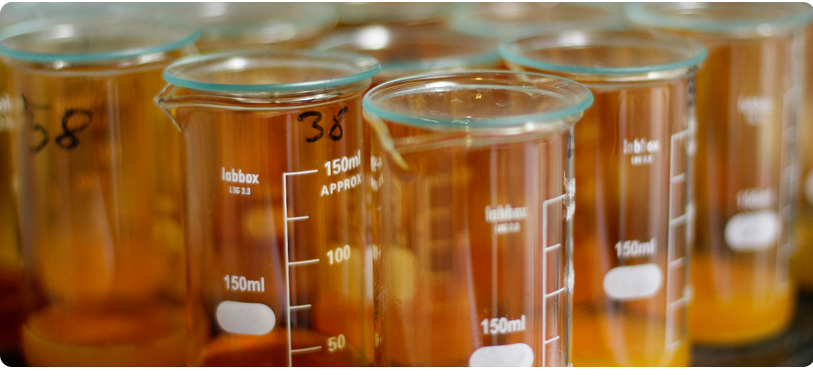
Laboratory Testing and Analysis
with Maximum Precision
At the Alex Stewart International laboratory network, we are committed to a highly qualified team and offer a wide range of precise and independent chemical testing and analysis services. We guarantee our clients the highest level of objectivity, enabling them to determine the true value of their materials.
· Base Metals and precious metals
· Minerals and concentrates
· Ferroalloys and metal recycling
· Electronic Scrap
· Coal and Coke
· Geochemistry and mineral exploration
· Metallurgy and environmental analysis
Our analyses combine classical wet chemistry techniques with state-of-the-art instrumental technology, including:
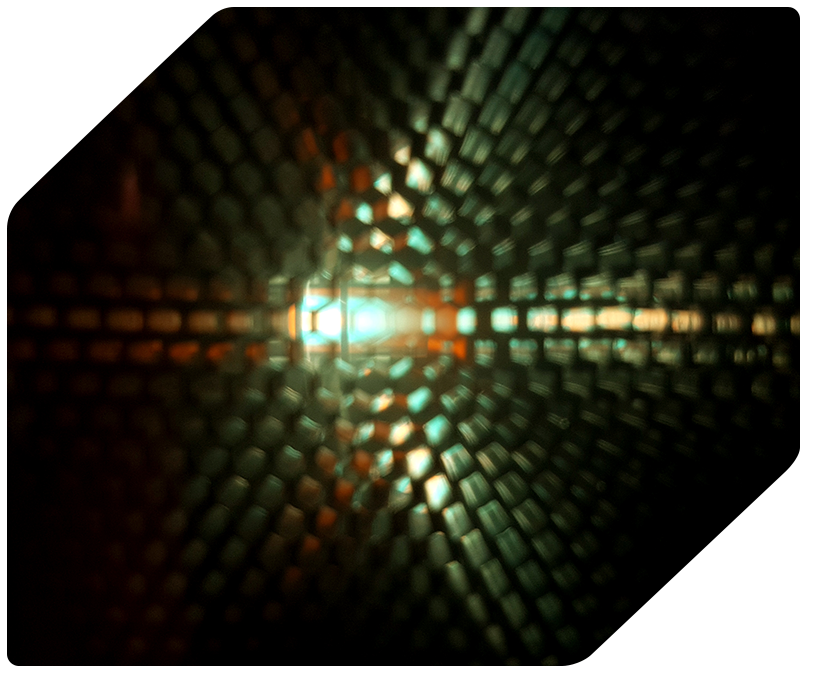
ICP
(Inductively Coupled Plasma Spectrometry)
The ICP-OES technique (Inductively Coupled Plasma Optical Emission Spectroscopy) is a multi-element analytical method that allows for the detection and quantification of a wide range of chemical elements in all type of samples.
It works by introducing the sample into a high-temperature argon plasma, where atoms are excited and emit light at characteristic wavelengths. This light is analyzed by an optical spectrometer, enabling the precise determination of the concentration of each element.
Thanks to its high sensitivity, speed, and ability to analyze multiple elements simultaneously, ICP-OES is widely used in sectors such as environmental monitoring, food industry, metallurgy, and scientific research.
XRF
(X-ray Fluorescence)
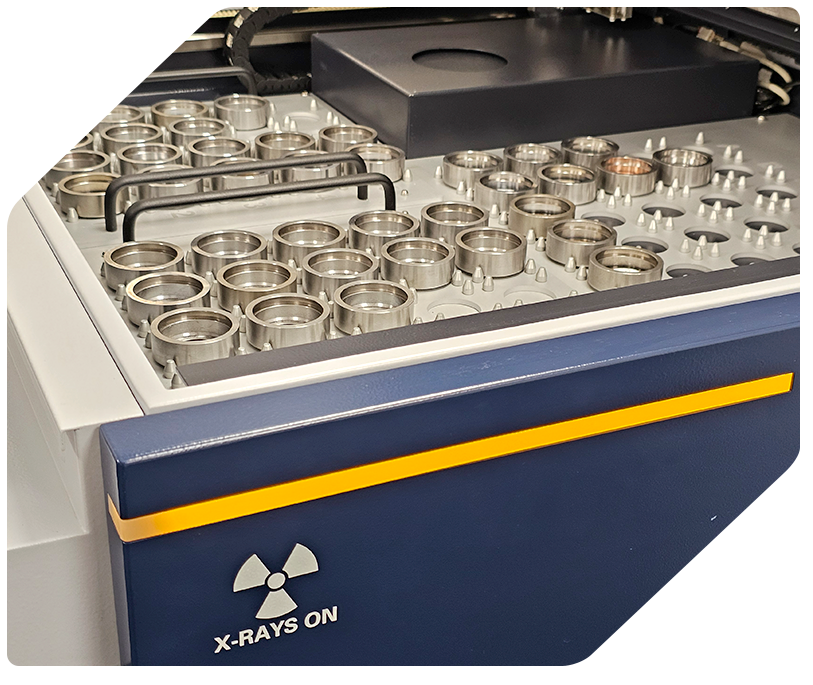
The WDXRF technique (Wavelength Dispersive X-ray Fluorescence) is a highly accurate and non-destructive elemental analysis method used across various industrial sectors.
By irradiating a sample with X-rays, the elements present emit characteristic radiation that is dispersed by analyzing crystals. This allows for the identification and quantification of elements according to their wavelength with great precision, even at very low concentrations.
Thanks to its versatility, reliability, and rapid sample preparation, WDXRF is a key tool for quality control as well as geochemical, metallurgical, and environmental studies.
IRC
(Infrared for Carbon and Sulfur)
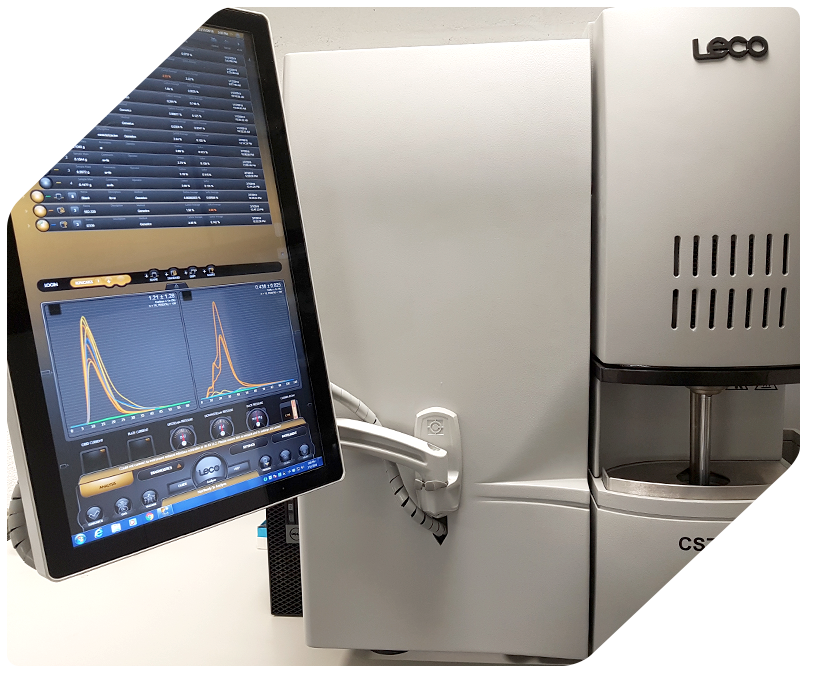
A carbon and sulfur IR analyzer is an elemental analysis instrument based on combustion, designed to accurately determine the carbon and sulfur content in inorganic materials such as metals, minerals, and ceramics.
The sample is burned in a pure oxygen atmosphere using high-frequency induction, generating gases like CO₂ and SO₂, which are detected by non-dispersive infrared (NDIR) cells.
This process allows for highly reliable quantification of both elements for all types of industrial and research laboratories.
SPARK-OES
(Spark Optical Emission Spectroscopy)
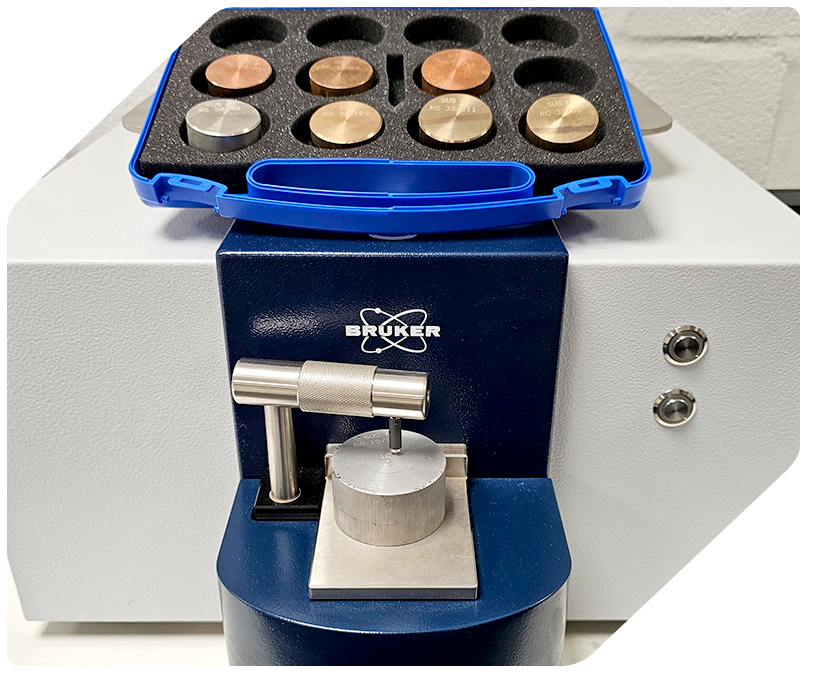
The Spark-OES technique (Spark Optical Emission Spectroscopy) is an analytical method primarily used for elemental analysis of metals and alloys.
It involves applying a spark-type electrical discharge to the metal sample, generating a plasma that excites the atoms present. These atoms emit light at characteristic wavelengths, which are detected by an optical spectrometer.
Thanks to its speed, accuracy, and ability to analyze multiple elements simultaneously, Spark-OES is widely used in quality control, material classification, metal recycling, and certification of metal products in industries such as steelmaking, automotive, and aerospace.
ADVANCED TITRATION SYSTEMS
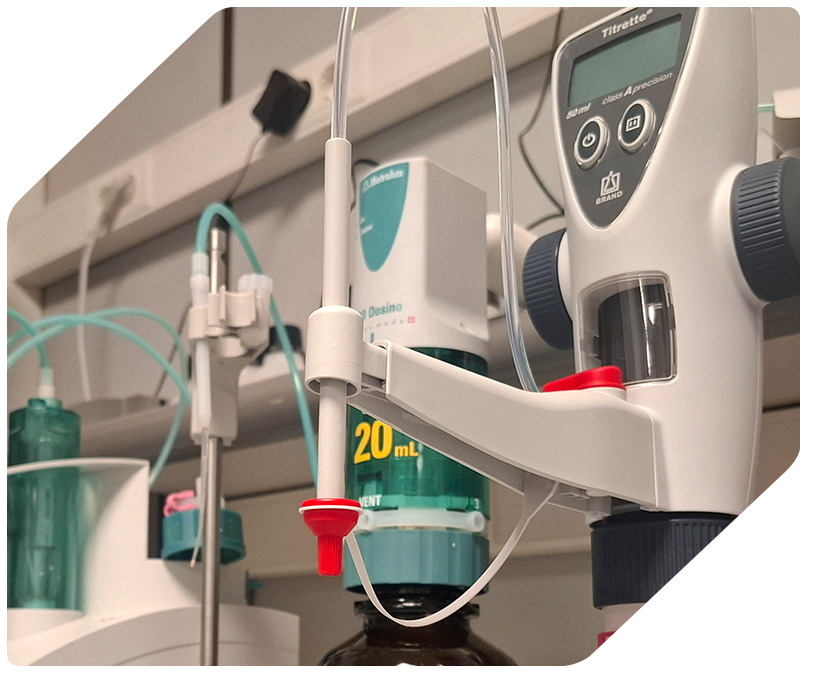
Automated titration techniques and methods based on ion-selective electrodes (ISE) are key analytical tools for the precise and rapid determination of specific concentrations in solutions.
Both approaches offer reliable and reproducible results, with minimal operator intervention and high efficiency in sample processing.
Thanks to their versatility and capability for integration into laboratory systems, they are widely used in sectors such as environmental monitoring, food industry, pharmaceuticals, and industrial process quality control.
FIRE ASSAY FOR
PRECIOUS METALS
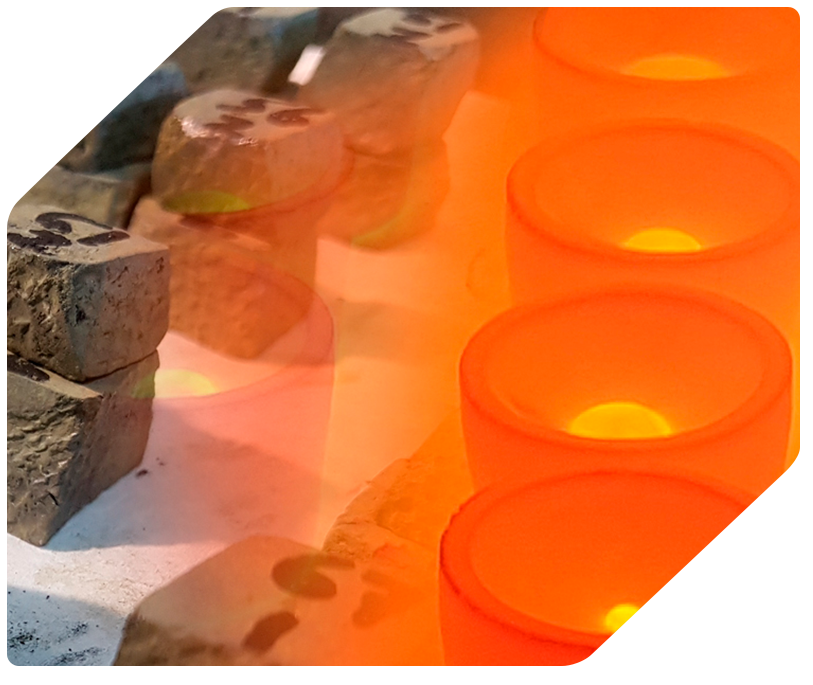
Fire assay is a classic and highly reliable technique used to determine the concentration of precious metals such as gold and silver in mineral samples.
The method involves melting the sample together with specific fluxes at high temperatures, producing a metallic phase that concentrates the elements of interest. Subsequently, cupellation is performed to separate the precious metals from the collector lead, obtaining a metallic button that is chemically analyzed.
This method, considered a benchmark in geochemistry and mining, stands out for its precision, robustness, and ability to handle complex matrices, making it essential in specialized laboratories and exploration and quality control processes.
OTHER ANALYTICAL METHODS
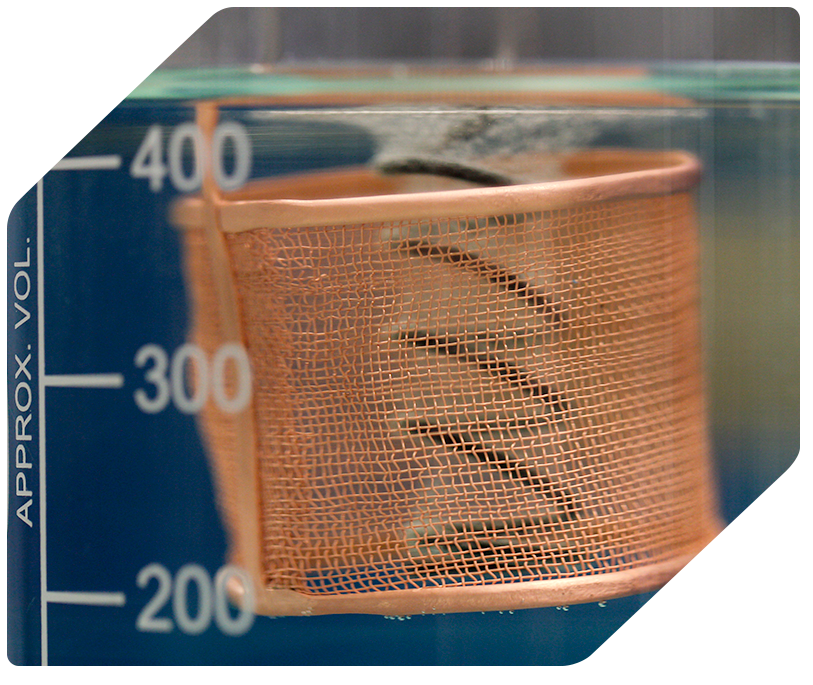
In our laboratory, we also perform classical and specialized analyses using techniques such as electrogravimetry and chemical titrations, ideal for the precise determination of elements like copper, tin, iron, lead, manganese, chlorine, zinc, and more.
These methods allow us to quantify analytes with high accuracy and traceability. Thanks to their reliability and adaptability to different matrices, they are essential tools for quality control of materials, metallurgical studies, and characterization of mineral samples.